
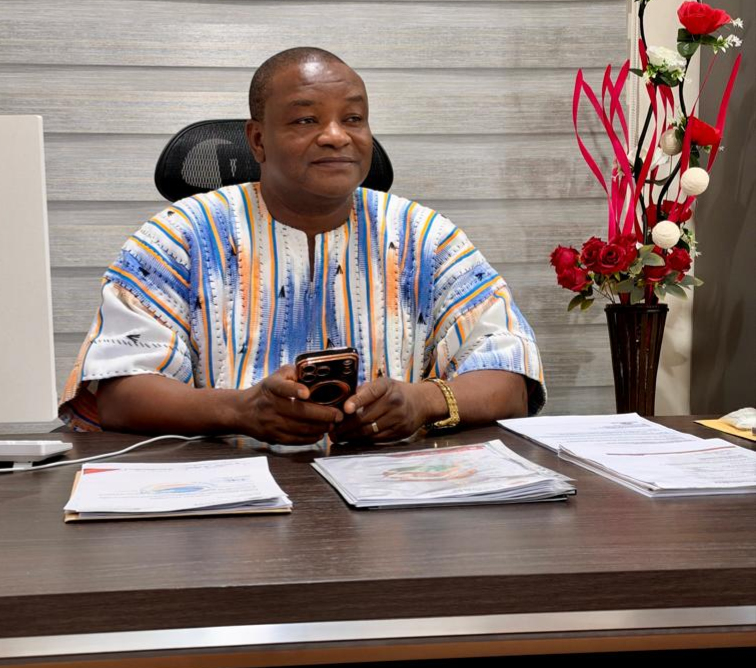
Founder and Leader of the All People’s Congress (APC), Dr. Hassan Abdulai Ayariga, has called on the John Dramani Mahama-led National Democratic Congress (NDC) government to address critical economic challenges confronting the country, warning that macroeconomic improvements must translate into better living conditions for ordinary Ghanaians.
In a comprehensive assessment of the government’s economic performance in 2026, released ahead of the presentation of the 2027 National Budget, Dr. Ayariga acknowledged improvements in inflation, fiscal consolidation and revenue mobilisation but insisted that significant gaps remain in employment creation, infrastructure development and policy implementation.
He said that although the government had made progress in stabilising the economy, the ultimate measure of economic success should be the quality of life of citizens rather than government announcements, budgetary allocations and impressive macroeconomic statistics.
According to him, the reduction in inflation is encouraging, but it does not necessarily mean that prices of goods and services have fallen or that household incomes and purchasing power have improved.
Dr. Ayariga also acknowledged improvements in government revenue mobilisation and the recording of a primary fiscal surplus during the first half of 2026, describing the developments as important steps towards restoring fiscal credibility and strengthening debt sustainability.
However, he expressed concern over government expenditure falling approximately 24.9 per cent below its programmed target during the first half of the year, raising questions about the timely release of funds to ministries, departments and agencies for the implementation of approved programmes.
He therefore challenged Finance Minister Dr. Cassiel Ato Forson to publish a comprehensive report detailing the amounts allocated, released and actually spent by every ministry, warning that fiscal discipline should not become an excuse for neglecting essential public services.
On unemployment, the APC leader said thousands of young Ghanaians continued to struggle to secure meaningful employment despite the country’s economic potential, urging the government to provide independently verifiable figures on permanent and temporary jobs created during 2026.
He argued that the 2027 Budget must clearly demonstrate how government investments and economic policies would generate sustainable employment, expand entrepreneurship and create opportunities for young people entering the labour market.
Dr. Ayariga also questioned the implementation of the government’s flagship 24-Hour Economy policy, acknowledging investment initiatives and businesses introducing additional operating shifts but insisting that the programme must be assessed based on actual investments, operational projects and jobs created.
He observed that a successful 24-Hour Economy required much more than extending business operating hours. It required reliable electricity, affordable financing, industrial infrastructure, security, transportation, market access and consistent demand for goods and services.
A factory, he noted, could not become profitable simply because it was encouraged to operate throughout the night, while a shop could not employ additional workers if customers lacked sufficient purchasing power.
He further expressed concern about the absence of a verified comprehensive figure for jobs created under the programme, calling on the government to publish detailed implementation reports showing actual investments, financing disbursements, operational businesses and employment outcomes.
On the proposed US$10 billion New Economy programme, Dr. Ayariga questioned its financing arrangements, implementation framework and relationship with the existing 24-Hour Economy initiative, insisting that the government must demonstrate measurable results from existing programmes before introducing additional economic commitments.
The APC leader also raised concerns about foreign participation and ownership in strategic sectors of the economy, arguing that although foreign investment remained important for capital, technology and international partnerships, such investments must deliver fair benefits to Ghana.
He called for a national review of major strategic concessions and public-private partnership agreements to establish their beneficiaries, financial obligations, duration, expected revenue and level of Ghanaian participation, while advocating greater local content and technology transfer.
Dr. Ayariga further urged the government to create favourable conditions for Ghanaian entrepreneurs to expand their businesses, particularly in manufacturing, agriculture, mining services, construction, logistics, tourism and technology, through improved access to finance, industrial land and procurement opportunities.
On agriculture, he called for increased investment in irrigation, mechanisation, storage facilities, agricultural roads and food processing, stressing that the sector must become a major driver of industrialisation, food security and employment creation.
He also expressed concern over Ghana’s water supply challenges, calling for a properly costed national water security programme and an urgent assessment of the reported US$60 million emergency financing requirement for Ghana Water Limited to strengthen water treatment and distribution infrastructure.
Addressing the cost of living, Dr. Ayariga urged the government to introduce practical measures to improve household incomes and address the rising costs of transportation, housing, utilities, education and healthcare without undermining fiscal sustainability.
As part of his proposed alternative economic approach, he outlined seven priorities for the 2027 Budget, including productive employment, Ghanaian enterprise development, reliable infrastructure, agricultural transformation, public financial accountability, strategic resource governance and measurable government performance.
He subsequently posed ten critical questions to President Mahama and the Finance Minister, demanding explanations on ministry funding releases, jobs created under the 24-Hour Economy, actual investment disbursements, infrastructure projects completed, Ghanaian participation in strategic concessions and measures to address the country’s water supply challenges.
Concluding his assessment, Dr. Ayariga urged the NDC government to use the 2027 Budget as an opportunity to address implementation gaps and place employment, domestic production, infrastructure development and economic ownership at the centre of its national development agenda.
He stressed that Ghana’s economic future depended on disciplined financial management, accountable leadership and the effective utilisation of national resources, insisting that the country’s development must create greater opportunities for its citizens.
“GHANA MUST BELONG TO GHANAIANS, AND AFRICA MUST BELONG TO AFRICANS,” he declared.
The assessment was signed by Dr. Hassan Abdulai Ayariga, Founder and Leader of the All People’s Congress (APC), in Accra on November 10, 2026.
Read the official statement below!
GHANA UNDER THE NDC GOVERNMENT IN 2026
ACHIEVEMENTS, POLICY FAILURES, ECONOMIC CHALLENGES AND THE WAY FORWARD
10th November 2026
Accra, Ghana
A National Economic and Governance Assessment Ahead of the 2027 Budget
BY DR. HASSAN ABDULAI AYARIGA
Founder and Leader, All People’s Congress (APC)
1. INTRODUCTION
As the National Democratic Congress (NDC) government prepares to present Ghana’s 2027 National Budget on Thursday, 12 November 2026, I consider it necessary to undertake a comprehensive assessment of the government’s economic performance, policy commitments, achievements and shortcomings during 2026.
Ghana belongs to all Ghanaians. Our collective responsibility is to ensure that the nation’s resources are managed in the best interests of its citizens, irrespective of political affiliation.
The purpose of this assessment is not to deny the government’s achievements or condemn every policy initiative. It is to examine whether the government’s promises are being translated into measurable improvements in employment, public services, infrastructure, economic ownership and the living standards of ordinary Ghanaians.
Economic development must be measured beyond government announcements, impressive budget figures and macroeconomic statistics.
The ultimate measure of national progress must be the quality of life of the Ghanaian people.
2. ACHIEVEMENTS OF THE NDC GOVERNMENT IN 2026
It is important to acknowledge areas where the government has recorded progress.
A. Macroeconomic stabilisation
The government has maintained a programme of fiscal consolidation, supported by improvements in revenue mobilisation, expenditure management and macroeconomic conditions.
The Bank of Ghana reported that the fiscal deficit for the first half of 2026 had declined compared with the corresponding period of 2025.
The government also recorded a primary fiscal surplus during the first half of the year.
These developments are relevant to restoring fiscal credibility and supporting debt sustainability.
B. Improved inflation performance
Ghana has experienced a substantial reduction in inflation compared with the high levels recorded in previous years.
This represents an important macroeconomic improvement.
However, lower inflation does not automatically mean that prices have fallen or that household incomes have improved.
The government must demonstrate how economic stabilisation is improving purchasing power, wages, employment and business opportunities.
C. Revenue mobilisation
Government revenue collections improved compared with the corresponding period in 2025, although collections remained below programmed targets.
This demonstrates progress in revenue mobilisation while also highlighting the need for stronger forecasting, compliance and administrative efficiency.
D. Economic policy initiatives
The government has continued to develop programmes involving the 24-Hour Economy, infrastructure investment, agricultural development and industrial transformation.
These initiatives have the potential to contribute to long-term economic development.
Nevertheless, their ultimate success must be judged by verified investment, completed projects, sustainable employment and increased domestic production.
3. THE PROBLEM OF FUNDING RELEASES TO MINISTRIES
One of the most important issues requiring explanation from the Minister for Finance, Dr. Cassiel Ato Forson, is the difference between approved budget allocations and actual expenditure.
According to Bank of Ghana reporting, total government expenditure during the first half of 2026 was approximately 24.9% below its programmed target.
Capital expenditure was also below its programmed level.
This raises legitimate questions about the timely financing of government programmes.
Parliament approves budgets for ministries, departments and agencies with the expectation that authorised activities will be implemented.
Where cash releases are delayed or insufficient, ministries may experience difficulties executing approved programmes.
The consequences can affect hospitals, schools, agricultural projects, road construction, water infrastructure and district-level development.
However, an expenditure shortfall does not automatically establish that the Finance Minister personally refused to release funds. Some differences may arise from revenue constraints, procurement procedures, delayed project implementation or savings in interest payments.
I therefore call on the Ministry of Finance to publish a comprehensive report showing the amounts allocated, released and actually spent by every ministry during 2026.
Fiscal discipline must not become an excuse for neglecting essential public services.
A national budget must be implemented, not merely announced.
4. THE UNEMPLOYMENT CHALLENGE
Employment remains one of Ghana’s most pressing development concerns.
Thousands of young people complete their education, hoping to secure productive employment or establish businesses.
Yet many continue to face limited opportunities, inadequate access to affordable capital and difficulties entering the formal economy.
The government must explain how its economic programmes are creating sustainable employment.
The 2027 Budget should clearly identify:
The number of verified new jobs created during 2026.
The number of permanent and temporary jobs.
Employment opportunities created through public investment.
Jobs generated through private-sector expansion.
The number of young people supported into sustainable entrepreneurship.
The economic sectors expected to generate employment in 2027.
Job creation cannot be measured solely by political promises or projected employment figures.
Ghanaians deserve independently verifiable results.
5. THE 24-HOUR ECONOMY: PROMISES AND IMPLEMENTATION GAPS
The 24-Hour Economy was presented as a major programme intended to transform Ghana’s productive capacity, increase exports and create employment.
The government has announced investment agreements and reported that some businesses have introduced additional operating shifts.
These developments should be acknowledged.
However, significant questions remain about implementation.
In October 2026, officials associated with the programme acknowledged that a verified comprehensive figure for jobs created was not yet available.
This is a major accountability concern for a programme whose central objectives include employment creation.
A functioning 24-Hour Economy requires much more than extending business operating hours.
It requires reliable electricity, affordable capital, industrial infrastructure, security, transportation, market access and consistent demand for goods and services.
A factory cannot become profitable simply because it is encouraged to operate throughout the night.
A shop cannot employ additional workers if customers lack sufficient purchasing power.
A manufacturing company cannot expand production without affordable electricity, financing and access to markets.
The 24-Hour Economy should therefore be evaluated as an industrial productivity programme, not merely a working-hours initiative.
I call on the government to publish a comprehensive implementation report detailing actual investments, financing disbursements, operational projects, new jobs and measurable increases in production.
6. THE PROPOSED NEW ECONOMY PROGRAMME
The government’s proposed US$10 billion New Economy programme raises important questions about financing, implementation and its relationship with the existing 24-Hour Economy.
Ghana needs economic transformation, but every new programme must have clearly defined objectives, credible funding and measurable targets.
The government should explain what has been achieved under existing programmes before introducing additional commitments.
The 2027 Budget must demonstrate how the New Economy programme will support Ghanaian enterprises, increase industrial production, strengthen agriculture and generate sustainable employment.
7. FOREIGN ECONOMIC PARTICIPATION AND NATIONAL OWNERSHIP
I am concerned about the long-term economic consequences of Ghana becoming excessively dependent on foreign ownership and control in strategic industries.
Foreign investment is important. Ghana needs international partnerships, technology, capital and access to global markets.
However, foreign investment must produce fair benefits for Ghana.
The country’s natural resources, land, infrastructure and strategic economic assets must be managed with proper regard for national ownership, public revenue and future generations.
We must examine whether major investment agreements provide sufficient opportunities for Ghanaian companies, workers and investors.
Where foreign businesses receive concessions or commercial opportunities, the government must ensure transparent procurement, appropriate local participation, technology transfer and compliance with Ghanaian law.
I call for a national review of major strategic concessions and public-private partnership agreements.
Such a review should establish the identity of beneficiaries, the duration of agreements, public financial obligations, expected revenue, Ghanaian participation and employment commitments.
I am not suggesting that every foreign investment agreement is harmful.
Rather, Ghana must ensure that foreign investment strengthens our economy instead of creating permanent dependence on external ownership and financing.
8. THE NEED FOR GREATER GHANAIAN ECONOMIC PARTICIPATION
Ghanaian entrepreneurs frequently face challenges accessing long-term finance, industrial land, affordable electricity, equipment and major procurement opportunities.
A sustainable national economic policy must create conditions in which Ghanaian enterprises can grow from small businesses into major industrial companies.
The government should support domestic manufacturing, agricultural processing, mining services, construction, logistics, tourism and technology.
Local content requirements must be practical, transparent and consistent with the law.
The objective should be to build competitive Ghanaian enterprises capable of participating meaningfully in the national and international economy.
Ghana’s development must be driven by the productive capacity of its people.
9. AGRICULTURE AND FOOD SECURITY
Agriculture must become a central pillar of national economic development.
Ghana possesses substantial agricultural potential, yet many farmers continue to face difficulties involving irrigation, machinery, storage, transportation, finance and access to markets.
The government must demonstrate measurable progress under its agricultural programmes.
The 2027 Budget should prioritise irrigation systems, mechanisation, agricultural roads, storage facilities and domestic food processing industries.
Agriculture should be linked directly to industrialisation, employment and export development.
10. WATER SUPPLY AND PUBLIC INFRASTRUCTURE
Ghana’s water supply challenges require urgent national attention.
Investment in water treatment plants, distribution pipelines, reservoirs and water-source protection must become a major development priority.
I call for a properly costed national water security programme, including an urgent assessment of the reported US$60 million emergency financing requirement for Ghana Water Limited.
The government must also address ageing pipelines, water losses and the maintenance of existing treatment facilities.
Reliable water supply is essential for households, hospitals, schools, industries and agricultural development.
A country cannot achieve sustainable economic transformation while communities continue to struggle for safe drinking water.
11. THE COST OF LIVING AND HOUSEHOLD WELFARE
Macroeconomic improvements are important, but they must translate into better living conditions.
The government must pay attention to household incomes, transportation costs, housing, utilities, education, healthcare and the cost of doing business.
The 2027 Budget should include measures to improve productivity, expand employment and protect vulnerable households without undermining fiscal sustainability.
12. MY PROPOSED ALTERNATIVE FOR THE 2027 BUDGET
I propose that the government consider a different approach built around seven national development priorities.
First: Productive employment
Direct investment towards industries capable of creating sustainable jobs, particularly agriculture, manufacturing, processing, logistics and technology.
Second: Ghanaian enterprise development
Establish transparent financing and procurement mechanisms that allow qualified Ghanaian businesses to expand and compete.
Third: Reliable infrastructure
Prioritise electricity, water, roads, sanitation and industrial infrastructure that directly support economic activity.
Fourth: Agricultural transformation
Support commercial farming, irrigation, mechanisation, food processing and access to domestic and international markets.
Fifth: Public financial accountability
Publish quarterly reports on budget releases, expenditure, completed projects and outstanding government obligations.
Sixth: Strategic resource governance
Strengthen transparency and public oversight of mining, energy, land and major infrastructure concessions.
Seventh: Measurable government performance
Require every major national programme to publish its objectives, funding, implementation timetable and independently verifiable results.
13. DIRECT QUESTIONS TO THE PRESIDENT AND FINANCE MINISTER
As the government prepares to present the 2027 Budget, I respectfully ask President John Dramani Mahama and Finance Minister Dr. Cassiel Ato Forson to address the following questions:
1. How much of the 2026 approved budget has actually been released to each ministry?
2. Which ministries have experienced funding shortfalls, and what measures are being taken to address them?
3. How many sustainable jobs have been created under the 24-Hour Economy?
4. What amount of announced investment has actually been disbursed and translated into operational projects?
5. What distinguishes the proposed New Economy programme from the 24-Hour Economy?
6. What safeguards protect Ghanaian ownership and participation in strategic concessions?
7. How many major government infrastructure projects have been completed during 2026?
8. What funding will be provided to resolve Ghana’s water supply challenges?
9. What specific measures will help Ghanaian businesses expand and employ more citizens?
10. How will the 2027 Budget translate economic stability into improved living standards?
These questions are fundamental to transparency, public accountability and responsible governance.
14. CONCLUSION
Ghana’s economic future requires more than political promises and ambitious policy announcements.
It requires disciplined financial management, productive investment, accountable leadership, functioning public institutions and meaningful opportunities for Ghanaian citizens.
The NDC government should be recognised where measurable improvements have occurred.
Equally, it must provide credible explanations where implementation has fallen short, funding has been inadequate or promised outcomes remain unverified.
The 2027 National Budget offers an opportunity to address these challenges.
I urge the government to place employment, Ghanaian enterprise development, infrastructure, agricultural productivity and public accountability at the centre of its economic programme.
The success of government must ultimately be measured by the welfare of the people.
Ghana must become a nation that produces more, creates more jobs, owns more of its economic opportunities and manages its resources for the benefit of present and future generations.
GHANA MUST BELONG TO GHANAIANS, AND AFRICA MUST BELONG TO AFRICANS.
May God bless our homeland Ghana and make our nation great and strong.
……Signed….
DR. HASSAN ABDULAI AYARIGA
Founder and Leader
All People’s Congress (APC)
Accra, Ghana.
