
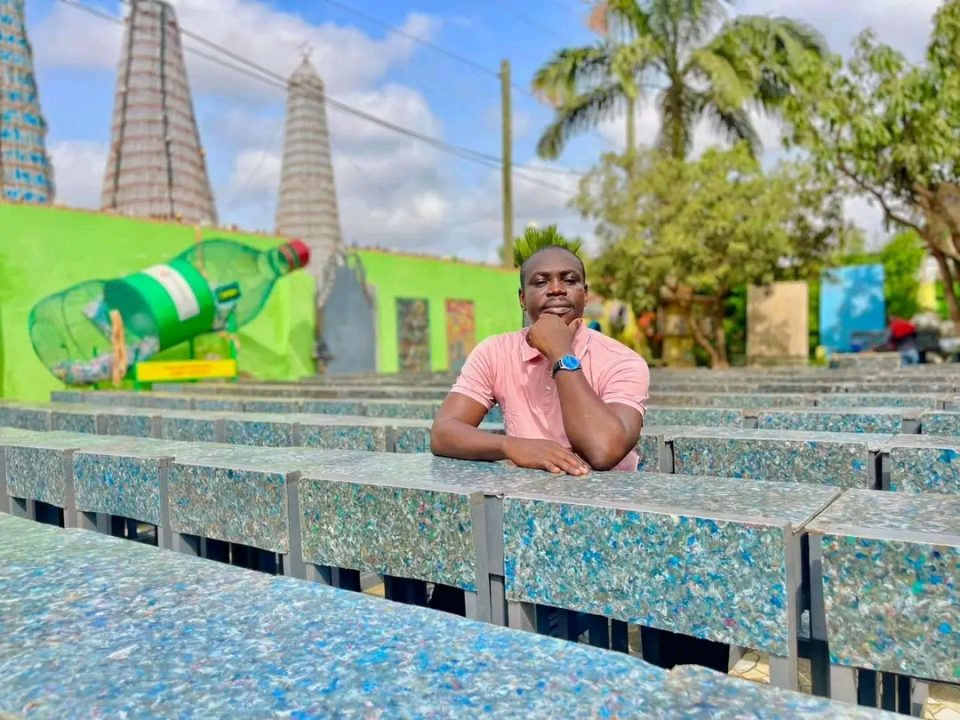
In a remarkable fusion of innovation and social impact, Ghanaian entrepreneur Makafui Awuku has developed a groundbreaking solution to two pressing national challenges—plastic waste pollution and inadequate school infrastructure. After five years of research and experimentation, Makafui has successfully converted discarded pure water sachets into durable school desks for children in underserved communities.
The initiative comes at a time when thousands of pupils across Ghana continue to learn while sitting on bare floors due to a shortage of classroom furniture. At the same time, plastic waste—particularly single-use water sachets—continues to choke drains, pollute communities, and threaten the environment.
Makafui’s idea was simple yet daring: recycle the very sachets that litter the environment into strong, wood-like boards that can be used to manufacture school desks. The process, however, was anything but easy. It took years of trial and error, limited funding, and a relentless belief in the potential of the idea.
“It was years of experiments and spending money I may never recover,” Makafui told reporters. “But that’s the reality of entrepreneurship—you often invest in the unseen, guided only by your belief in the outcome.”
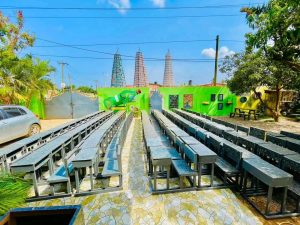
Today, that belief has paid off. Makafui has completed the first batch of 200 desks, all made entirely from recycled plastic waste. These desks are set to be distributed to schools in need, giving students not only comfort and dignity but also a cleaner environment to grow up in.
The project is already drawing praise for its dual impact. Environmentalists have lauded it as a practical approach to plastic waste management, while education advocates see it as a much-needed intervention in tackling the country’s chronic shortage of school furniture.
Experts say innovations like Makafui’s could provide scalable models for sustainable development in Ghana and beyond. “This is exactly the kind of grassroots innovation that should be supported by both government and the private sector,” said an environmental policy analyst in Accra.
Makafui is calling for broader support to expand production and reach more schools across the country. With access to better funding, he believes his team can produce thousands of desks annually, while keeping tons of plastic out of the ecosystem.
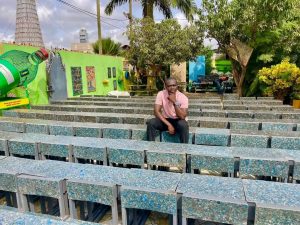
He also had a message for young innovators across the country: “Your dreams are valid. You don’t need anyone else to believe in them. When you had those dreams, no one else was there. So stick with it, keep improving, and be patient—it will all come together.”
As Ghana faces mounting environmental and educational challenges, this homegrown solution offers hope—and proof—that sustainable change is possible.
Individuals or institutions interested in supporting the initiative can contact Makafui Awuku directly via WhatsApp at +233 243 548 478.
