
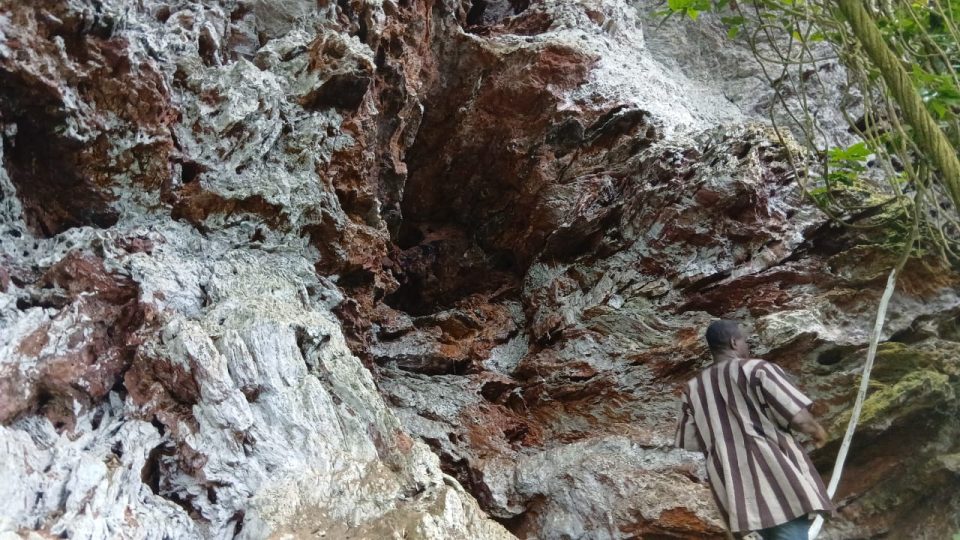
Nananom and elders of Ntakam in the Bibiani-Anhwiaso-Bekwai Municipality of the Western North Region have appealed for investment in the development of the historic Obour Kofi heritage site, emphasizing its potential to boost tourism and improve livelihoods in the community.
The appeal was made by the Abakomahene, Nana Yaw Gyam, who spoke on behalf of the Chief, Nana Kwadwo Somiah II, also serving as Abakomahene of the Anhwiaso Traditional Council. The elders urged authorities to preserve the site and develop it to highlight its cultural and historical significance.
According to tradition, male and female couples once met on the rock, making Obour Kofi a sacred and symbolic landmark in Ntakam’s history. One of the most fascinating features of the site, the Abakomahene explained, is the footprints etched into the rock, believed to belong to these couples—a tangible connection to the past that continues to attract curiosity and reverence.
Obour Kofi is a large natural rock formation with a wide surface and impressive height, naturally powdered over time, giving it a unique aesthetic and striking presence. Inside the rock are chamber-like spaces resembling halls, which traditionally served as venues for community gatherings and important discussions.
The Nananom noted that, with proper development, these chambers could be transformed into resting areas for tourists, providing a serene environment for visitors to explore and experience the site comfortably. They also stressed that developing Obour Kofi could create jobs for the youth, support small businesses, and place Ntakam on Ghana’s tourism map.
The community assured that it is ready to support any initiative aimed at preserving and promoting the site while safeguarding its cultural values.
Finally, the Nananom appealed to the Anhwiaso Traditional Council, the Ministry of Tourism, Arts and Culture, and the Ghana Tourism Authority to visit Ntakam and consider Obour Kofi for national tourism development, describing it as “a living testament to our ancestors and a treasure for future generations.”
