
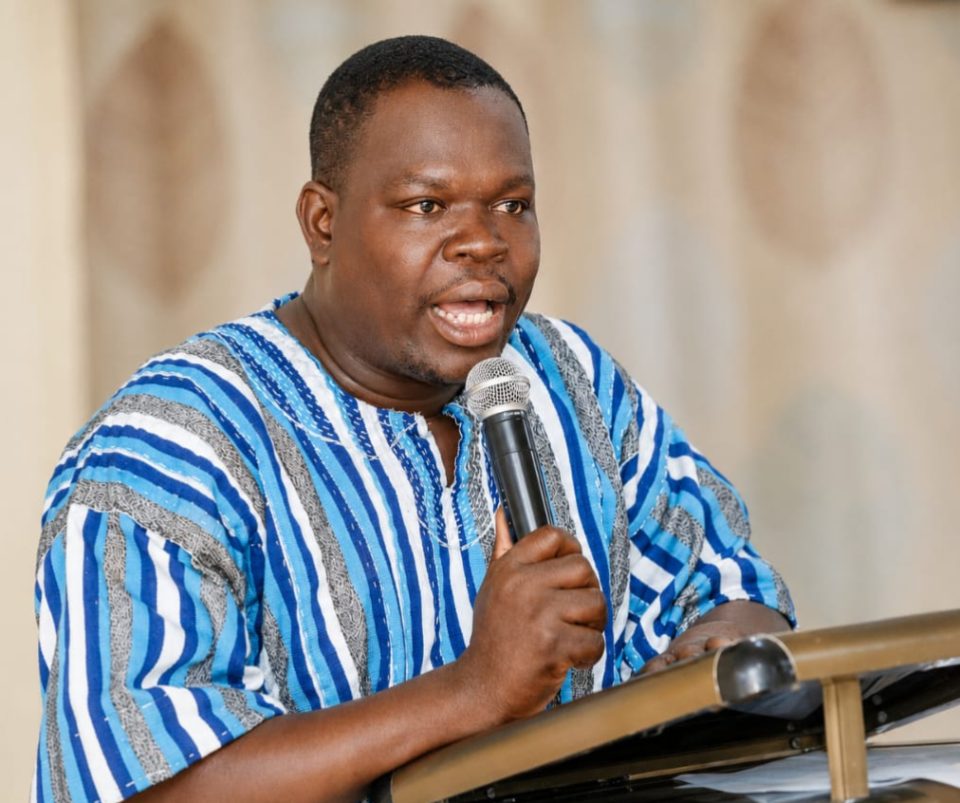
The Communication Officer of the New Patriotic Party (NPP) in the Ho West Constituency, Constance Kwame Agbedienu, has questioned the government’s reported decision to extend the deadline for abolishing the Free SHS double-track system from 2027 to 2029, describing the development as a major test of the National Democratic Congress’ (NDC) campaign credibility.
According to him, the NDC made the abolition of the double-track system one of its flagship education promises during the 2024 election campaign, assuring Ghanaians that it would bring the policy to an end within a short period after assuming office.
He noted that reports indicating the target has now been pushed to 2029 have raised concerns among many Ghanaians, particularly parents, students, teachers, and education stakeholders who expected the promise to be fulfilled within the original timeframe.
Mr. Agbedienu said the latest development raises an important question about how many of the government’s major campaign promises have been implemented according to schedule since assuming office.
He observed that while every government may encounter unforeseen economic and administrative challenges, repeated revisions to key policy deadlines inevitably invite public scrutiny and cast doubt on the level of planning that informed those commitments.
The Ho West NPP Communication Officer recalled that the double-track system was introduced by the previous NPP administration as a temporary intervention to accommodate the sharp rise in student enrolment under the Free SHS policy while additional classroom infrastructure was being constructed.
He said the NDC consistently criticised the arrangement while in opposition, insisting that it had a faster and more effective solution that would eliminate the need for double-track schooling.
According to him, the realities of governance now appear to demonstrate that implementing such reforms is more complex than political campaign messages often suggest, making the extension of the deadline difficult to ignore.
Mr. Agbedienu argued that the decision to postpone the target by two additional years raises legitimate concerns about planning, preparedness, and the feasibility of the commitments made to the electorate before the elections.
He stressed that the issue extends beyond the double-track system and speaks directly to the broader question of political accountability, insisting that Ghanaians deserve realistic and achievable promises rather than timelines that require repeated adjustments after elections.
He further stated that while improving educational infrastructure and ensuring quality learning should remain the government’s priority, maintaining public confidence also requires openness, transparency, and honest explanations whenever policy targets cannot be achieved as initially promised.
Mr. Agbedienu maintained that leadership should ultimately be measured by the ability of governments to fulfil the promises made to the electorate, saying public trust is strengthened when political commitments are matched by timely delivery.
© Constance Kwame Agbedienu
Communication Officer, NPP Ho West Constituency
Read the official statement below!
ANOTHER BROKEN PROMISE? THE DOUBLE-TRACK DEADLINE MOVES AGAIN
When the National Democratic Congress (NDC) campaigned ahead of the 2024 elections, one of its prominent promises was to end the Free SHS double-track system. The message was simple: given the opportunity to govern, the policy would be implemented swiftly.
Today, Ghanaians are being told that the deadline has shifted. Instead of ending the double-track system by 2027, the government has reportedly extended the target to 2029.
This naturally raises an important question: Which campaign promises has this government been able to deliver on schedule?
Political campaigns are built on promises, but governments are judged by performance. It is understandable that unforeseen challenges can affect implementation. However, when deadlines are repeatedly revised, citizens are justified in asking whether proper planning informed those commitments in the first place.
The double-track system was introduced by the previous NPP administration as a temporary measure to accommodate the unprecedented increase in enrolment under the Free SHS policy while new infrastructure was being developed. The NDC strongly criticised the policy and assured Ghanaians that it had a quicker and better alternative.
Now that it has the responsibility of governing, the realities of implementation appear more complex than the campaign rhetoric suggested. Extending the deadline by two years raises legitimate concerns about planning, preparedness, and the feasibility of the original promise.
This is not merely about the double-track system. It speaks to a broader issue of political credibility. Ghanaians deserve realistic commitments rather than promises that require repeated revision after elections.
As we move forward, the focus should be on ensuring that every student receives quality education in an environment that supports effective teaching and learning. Equally, governments must appreciate that public trust is strengthened when campaign promises are fulfilled or, where circumstances change, when clear, honest explanations are provided.
Leadership is ultimately measured not by the promises made on the campaign trail, but by the promises kept in office.
© Constance Kwame Agbedienu
Communication Officer, NPP Ho West
