
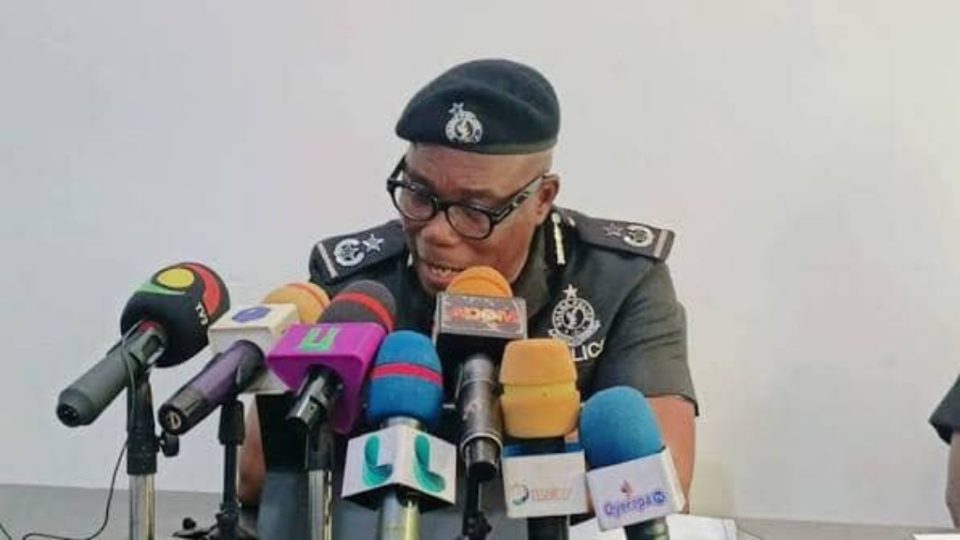
DCOP Dr. F.K. Tsidi, the Western North Regional Police Commander, has called on student teachers to embrace innovation, creativity, and practical teaching methods to transform education and better prepare learners for the demands of the modern world. He made the call while delivering a lecture titled “Innovative Student Teacher: Transforming Education Through Practice and Creativity.”
Addressing educators and future teachers, Dr. Tsidi stressed that effective education goes beyond memorisation and classroom theory. Quoting renowned education reformer John Dewey, he said, “Education is not preparation for life; education is life itself,” urging student teachers to make learning engaging, practical, and relevant to everyday life.
He observed that traditional teaching methods centred on rote learning are no longer sufficient in preparing students for contemporary challenges. According to him, today’s learners require critical thinking, creativity, and problem-solving skills, which can only be developed through active participation and practical learning experiences.
Dr. Tsidi explained that an innovative student teacher serves not only as an instructor but also as a practitioner, creator, and transformer. Drawing on the philosophy of Brazilian educator Paulo Freire, he noted that teaching should create opportunities for learners to construct knowledge rather than simply receive information from teachers.
The Regional Police Commander outlined five key qualities every innovative student teacher should possess: being reflective, adaptable, technologically competent, collaborative, and capable of solving classroom challenges through practical research and continuous improvement.
As part of practical strategies for improving classroom instruction, Dr. Tsidi encouraged future teachers to adopt experiential learning by engaging students in hands-on activities such as school gardening, practical mathematics, and science projects that connect classroom lessons to real-life situations.
He also advocated the effective use of technology in teaching, recommending digital tools such as Kahoot, Canva, and structured artificial intelligence applications to enhance classroom participation. He further encouraged students to produce instructional videos as part of their learning process instead of remaining passive recipients of knowledge.
On learner-centred education, Dr. Tsidi urged teachers to embrace collaborative approaches such as peer teaching, the Jigsaw learning method, and classroom debates to encourage active participation. He further advised educators to integrate local culture into lessons by using indigenous games like Kyempe, Ananse stories, and traditional festivals to make learning more meaningful and culturally relevant.
While acknowledging challenges, including limited teaching resources, rigid curriculum schedules, and examination pressures, Dr. Tsidi advised student teachers to begin with small innovations, collaborate with colleagues, evaluate classroom outcomes, and continuously improve their teaching methods through reflection and practice.
He concluded by reminding future educators that their responsibility extends beyond completing the syllabus to designing meaningful learning experiences that shape lives. Quoting Paulo Freire, he ended his lecture with the words, “Education does not change the world; education changes people, and people change the world,” urging student teachers to become agents of educational transformation through creativity and dedication.
Read the full statement below!
INNOVATIVE STUDENT TEACHER: TRANSFORMING EDUCATION THROUGH PRACTICE AND CREATIVITY
Lecturer: DCOP Dr. F. K. Tsidi, Regional Police Commander, Western North.
1. Introduction & Core Philosophy
Opens with John Dewey’s quote: “Education is not preparation for life; education is life itself.”
Emphasizes that innovative teaching combines practice and creativity to prepare learners for real-world challenges rather than relying on rote memorisation.
2. Defining the Innovative Student Teacher
An innovative student teacher is:
– Reflective
– Adaptable
– Tech-savvy
– Collaborative
– Problem-solver
The lecture also references Paulo Freire’s philosophy that teaching should create opportunities for learners to construct knowledge rather than simply receive it.
3. Four Practical Strategies
Experiential Learning: School gardens, practical mathematics, and hands-on activities.
Creative Technology Integration: Kahoot, Canva, AI tools, and instructional videos.
Learner-Centred Methods: Jigsaw learning, debates, and peer teaching.
Local and Cultural Innovation: Using Kyempe for mathematics, Ananse stories for literature, and festivals such as Akwasidae and Eluo to teach history and culture.
4. Challenges
The lecture identifies:
– Limited resources
– Resistance to change
– Tight curriculum schedules
– Examination pressure
It encourages teachers to start with small innovations, collaborate with colleagues, reflect on outcomes, and document successful practices.
5. Conclusion
The lecture concludes by urging teachers to:
– Teach the student, not just the syllabus.
– Design meaningful learning experiences.
– Use creativity and practical approaches to transform education.
It ends with Paulo Freire’s quote:
«”Education does not change the world; education changes people, and people change the world.”»
