
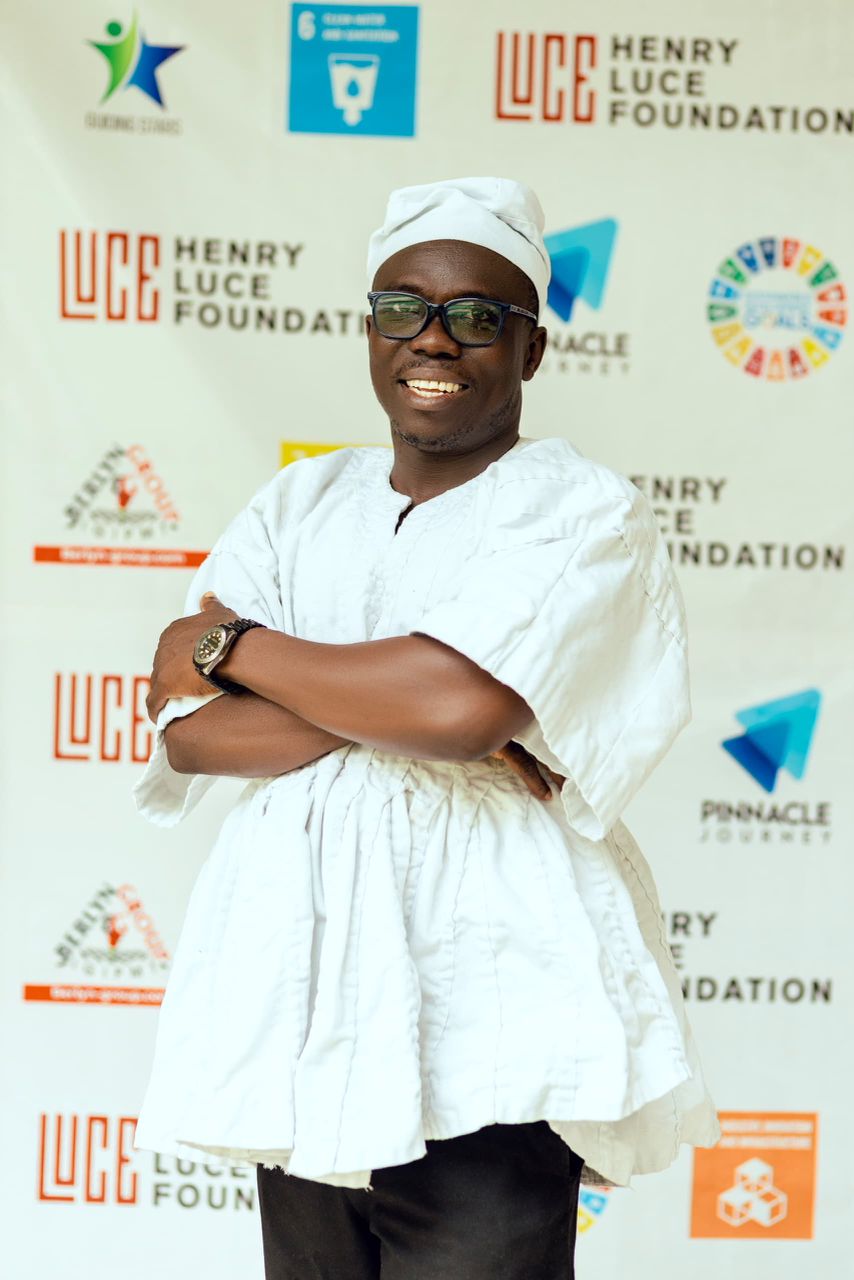
Accra — The President of Molex Foundation Africa, Dr. Patrick Essien, a Space and Environmental Scientist and Lecturer at the University of Cape Coast, has appealed for greater support to train over 500 young girls in Science, Technology, Engineering, and Mathematics (STEM).
Dr. Essien made the appeal at the closing ceremony of the Sheroes in STEM programme, where 60 girls successfully graduated after undergoing intensive training in Artificial Intelligence (AI), coding, robotics, and critical thinking. The event marked another milestone in the foundation’s mission to empower young women and bridge the gender gap in STEM education across Africa.
According to Dr. Essien, STEM has long been perceived as a male-dominated field, discouraging many girls from exploring its vast opportunities. He noted that the stereotype continues to hold back the nation’s full potential, as half of its population remains underrepresented in fields critical to national development and innovation.
“STEM should not be viewed as a field reserved for men,” Dr. Essien stressed. “Young women have the talent, creativity, and intelligence to lead innovation in technology, science, and engineering. What they need is encouragement, opportunity, and support.”
He explained that through the Sheroes in STEM initiative, Molex Foundation Africa has been equipping girls with essential 21st-century skills designed to prepare them for the rapidly evolving digital world. The programme, he said, combines technical training with mentorship and leadership development to produce confident and competent future innovators.
Dr. Essien revealed that the foundation intends to scale up its operations, especially in the northern regions of Ghana, where access to STEM opportunities remains limited. “We want to reach girls in underserved areas — those who may never have seen a computer or had the chance to learn coding — and show them that they, too, can become global problem solvers,” he said.
He called on the government, corporate organizations, and philanthropists to partner with Molex Foundation Africa to expand its reach. With additional funding and collaboration, he said, the foundation could impact hundreds more girls, offering them hands-on training and career guidance in cutting-edge STEM disciplines.
The programme has already seen remarkable success stories, with several participants pursuing further studies in technology- and science-related courses. Graduates of Sheroes in STEM are expected to become role models in their communities, inspiring other girls to dream big and break traditional barriers.
Dr. Essien also emphasized that empowering girls in STEM is not just a matter of equality but a necessity for Ghana’s socio-economic growth. “A nation that leaves its women behind cannot achieve full development. By investing in girls’ education, we invest in innovation, productivity, and the future of our country,” he added.
Parents and educators were also encouraged to nurture the curiosity of young girls from early childhood by providing them with access to learning tools and exposure to STEM concepts.
The Molex Foundation Africa plans to partner with schools and development agencies to sustain the initiative and integrate STEM learning into mainstream education at all levels.
