
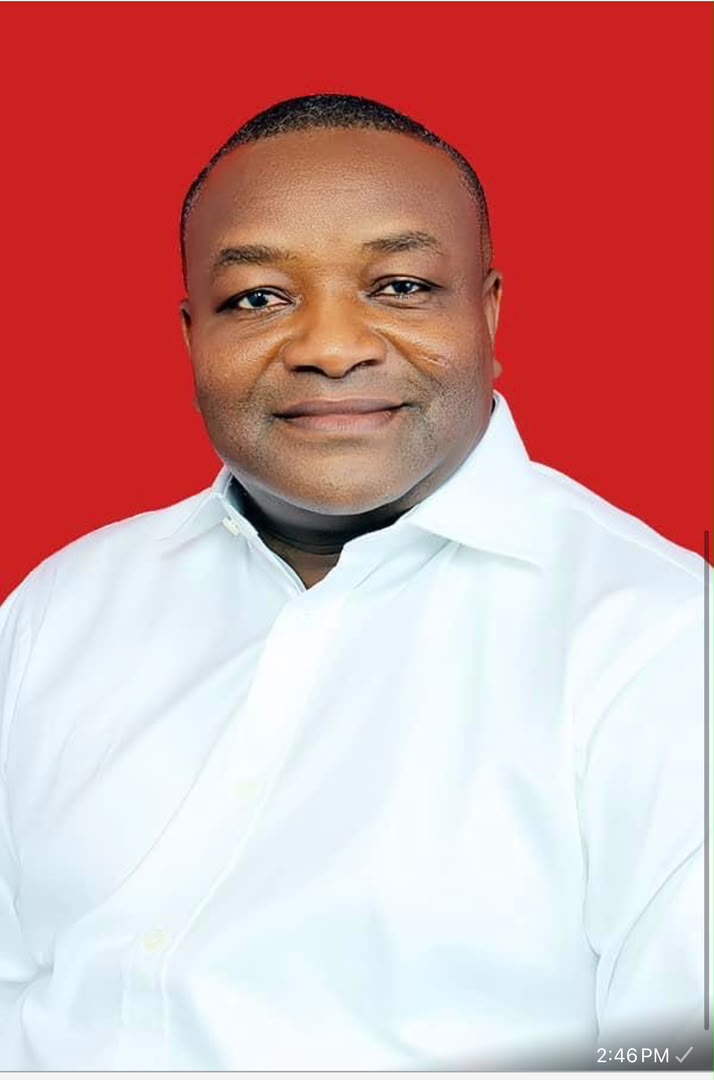
Founder and Leader of the All People’s Congress (APC), Dr. Alhaji Hassan Abdulai Ayariga, has called on the government to adopt a comprehensive “Ghana First” economic policy to empower indigenous businesses and safeguard the country’s economic sovereignty.
In a national statement issued on October 11, 2026, Dr. Ayariga expressed concern over what he described as the growing tendency of successive governments to give foreign companies major economic opportunities, infrastructure projects and access to natural resources while Ghanaian businesses struggle to secure contracts and affordable financing.
He questioned the level of government support available to indigenous entrepreneurs, asking how many Ghanaian-owned companies had received comparable opportunities, financial assistance and institutional backing to undertake major national projects.
According to him, Ghanaian businesses have the potential to play leading roles in construction, mining, agriculture, energy, transportation, manufacturing and infrastructure development if they receive the necessary support to compete effectively.
Dr. Ayariga also raised concerns about the transfer or leasing of valuable agricultural and ancestral lands to foreign interests, warning that poorly structured land transactions could undermine the economic interests of future generations. He urged traditional authorities, family heads and landowners to exercise caution and protect the country’s productive lands.
The APC leader, however, clarified that his position was not against foreign investment but against what he termed “foreign economic domination.” He maintained that responsible foreign investment remained important for job creation, technology transfer and industrial development, provided the benefits were shared fairly with Ghanaians.
He further called for greater scrutiny of foreign-owned businesses operating in strategic sectors, including mining, construction, trading, manufacturing and agriculture. He specifically raised questions about the expanding involvement of Chinese companies in Ghana’s economy, stressing the need for evidence-based assessments, transparent contracts and fair regulation.
On public-private partnerships (PPPs), Dr. Ayariga argued that such arrangements should create opportunities for qualified Ghanaian companies to participate in major projects. He questioned why indigenous businesses were not being more deliberately positioned to lead national infrastructure initiatives and called for improved access to government-backed financing and credit guarantees.
He also challenged the government to demonstrate greater commitment to promoting Ghanaian businesses, urging the President to support local contractors, engineers, manufacturers and entrepreneurs to become internationally competitive. He argued that Ghanaian companies should not be disadvantaged by unequal access to capital and institutional support.
Beyond Ghana, Dr. Ayariga called on African governments to reduce their dependence on raw-material exports, foreign financing and imported finished products. He advocated stronger intra-African trade, industrialisation, technology development and regional value chains to enable African businesses to compete more effectively in the global economy.
As part of his proposed “Ghana First” economic policy, he outlined eight priority areas: greater Ghanaian ownership and participation in strategic projects; protection of national assets; fair access to government contracts; affordable business financing; local content and technology transfer; transparent PPP agreements; protection of agricultural lands; and stronger African economic cooperation.
Dr. Ayariga warned that future generations risk becoming economically marginalised in their own country if Ghana fails to strengthen local ownership and participation in key industries. He urged the government to reconsider its approach to foreign investment and indigenous business development, insisting that international partnerships should complement rather than undermine Ghana’s economic independence.
“Ghana is not for sale,” he declared, calling for a shift from political independence to genuine economic independence. He maintained that Ghana must welcome foreign investors while ensuring that its citizens retain meaningful opportunities to own businesses, develop industries and benefit from the country’s natural resources.
READ THE OFFICIAL STATEMENT BELOW!
THE ECONOMIC TAKEOVER OF GHANA AND AFRICA: ARE WE SELLING OUR FUTURE TO FOREIGNERS?
A NATIONAL STATEMENT BY DR. HASSAN ABDULAI AYARIGA
Founder and Leader of the All People’s Congress (APC)
11th October 2026
GHANA MUST BELONG TO GHANAIANS, AND AFRICA MUST BELONG TO AFRICANS!
I write today not only as a politician and leader of the All People’s Congress (APC), but also as a deeply concerned and pained Ghanaian citizen and a patriotic African who is increasingly worried about the economic direction of our beloved country and continent.
In recent times, I have watched with growing concern how successive governments, including the current administration, appear increasingly comfortable handing over strategic economic opportunities, major infrastructure projects, valuable natural resources and commercial advantages to foreign companies while Ghanaian businesses struggle to survive.
Almost every week, we hear announcements of major projects, sod-cutting ceremonies, foreign investment agreements and public-private partnerships involving foreign companies.
But I ask a simple question:
MR. PRESIDENT, HOW MANY GHANAIAN-OWNED COMPANIES HAVE YOU CUT SOD FOR?
How many Ghanaian entrepreneurs have been given the same opportunities, financial support, government guarantees and institutional backing that foreign investors receive?
How many indigenous Ghanaian companies have been deliberately empowered to become major players in construction, mining, agriculture, energy, transportation, manufacturing, waste management and infrastructure development?
Why must a Ghanaian businessman struggle for years to secure government support while foreign investors are welcomed with extraordinary privileges?
ARE GHANAIANS NO LONGER CAPABLE OF BUILDING THEIR OWN COUNTRY?
OUR LANDS ARE DISAPPEARING BEFORE OUR EYES
Across Ghana, valuable agricultural lands, ancestral properties and strategically located lands are increasingly being transferred or leased to foreign interests.
Some traditional authorities, family heads and landowners are entering into arrangements that may provide immediate financial benefits but could undermine the long-term economic interests of future generations.
Our chiefs and traditional leaders are custodians of our ancestral lands. They have a sacred responsibility to protect these lands for generations yet unborn.
Land is not merely a commodity to be exchanged for money.
LAND IS POWER. LAND IS WEALTH. LAND IS IDENTITY. LAND IS OUR FUTURE.
When a nation loses meaningful control over its productive lands, strategic industries and natural resources, it risks losing its economic independence.
We must therefore ask ourselves:
What will be left for our children and grandchildren if we continue transferring control of our most valuable national assets without adequate safeguards?
FOREIGN INVESTMENT MUST NOT BECOME FOREIGN ECONOMIC DOMINATION
Let me make my position absolutely clear.
I AM NOT AGAINST FOREIGN INVESTMENT. I AM AGAINST FOREIGN ECONOMIC DOMINATION.
Ghana welcomes responsible investors from China, Europe, America, India, the Middle East and every other part of the world.
We appreciate genuine partnerships that create jobs, transfer technology, develop industries and contribute to national prosperity.
But foreign investment must never become an excuse to marginalise Ghanaian entrepreneurs or surrender control of our economy.
Our concern is not the nationality of investors. It is the terms under which investments are made, who controls the assets, who receives the profits and whether Ghanaian citizens benefit.
We must critically examine the growing influence of foreign-owned businesses in strategic sectors of our economy, including mining, construction, trading, manufacturing, agriculture and infrastructure development.
In particular, the expanding involvement of Chinese companies in Ghana’s economic activities raises important questions about local participation, ownership, competition and the protection of Ghanaian businesses.
These concerns must be addressed through evidence, transparent contracts and fair regulation rather than hostility towards foreign nationals.
GHANA MUST BE A PARTNER IN DEVELOPMENT, NOT A SPECTATOR IN ITS OWN ECONOMY.
PUBLIC-PRIVATE PARTNERSHIPS MUST BENEFIT GHANAIANS
Public-private partnerships were never intended to become instruments through which foreign companies dominate opportunities that capable Ghanaian businesses could undertake.
The fundamental purpose of PPP arrangements should be to mobilise investment, improve public infrastructure, create employment, transfer knowledge and generate sustainable economic benefits.
Yet we must ask:
Why are indigenous Ghanaian businesses not being deliberately positioned to lead major national projects?
Why can Ghanaian companies not receive government-backed financing and guarantees to develop our infrastructure?
Why are foreign companies sometimes treated as more credible than Ghanaian companies before their actual capabilities are assessed?
Why must Ghanaian entrepreneurs compete against foreign businesses that may have access to cheaper capital, stronger financial institutions and direct government support from their home countries?
A GOVERNMENT THAT DOES NOT EMPOWER ITS OWN BUSINESSES CANNOT BUILD A TRULY INDEPENDENT ECONOMY.
MR. PRESIDENT, CHARITY BEGINS AT HOME
Mr. President, with all due respect, I wish to ask:
When you cut sod for major projects involving foreign companies, do you consider the Ghanaian entrepreneurs who have spent their entire lives investing in this country?
Do you consider the indigenous businesses struggling to obtain contracts, affordable financing and opportunities?
Do you consider the Ghanaian contractors, engineers, manufacturers and business owners who have the knowledge and capacity to deliver quality projects?
Mr. President, how many Ghanaian companies have you personally championed, supported and elevated to become internationally competitive businesses?
How many Ghanaian-owned companies have benefited from strategic partnerships deliberately structured by your government?
MR. PRESIDENT, YOU ARE THE PRESIDENT OF GHANA, AND YOUR FIRST ECONOMIC RESPONSIBILITY IS TO THE PEOPLE OF GHANA.
Foreign investors have governments that protect their economic interests.
Chinese companies have a government that advances China’s national economic interests.
American companies benefit from policies designed to strengthen American economic competitiveness.
European countries actively protect and promote their strategic industries.
WHO IS PROTECTING AND PROMOTING GHANAIAN BUSINESSES?
Who is creating opportunities for Ghanaian entrepreneurs to become billionaires through productive investments?
Who is ensuring that Ghanaian companies grow into multinational corporations capable of competing across Africa and the world?
We cannot continue celebrating foreign investment while neglecting the development of our own indigenous business community.
AFRICA MUST WAKE UP BEFORE IT IS TOO LATE
This problem extends far beyond Ghana.
Across Africa, many countries continue to export raw materials, import finished products, depend on foreign financing and allow external interests to exercise significant influence over strategic economic decisions.
Africa possesses enormous mineral wealth, fertile agricultural lands, energy resources, a growing population and a talented entrepreneurial class.
Yet millions of Africans continue to live in poverty while much of the value generated from African resources is captured elsewhere.
Our ancestors fought for political independence.
But political independence without meaningful economic independence remains incomplete.
WE CANNOT CLAIM TO BE POLITICALLY FREE WHILE REMAINING ECONOMICALLY DEPENDENT.
Africa must move beyond being merely a supplier of raw materials and a market for foreign products.
We must become owners of industries, developers of technology, producers of finished goods and controllers of our strategic economic assets.
MY CALL FOR A GHANA-FIRST ECONOMIC POLICY
As Founder and Leader of the All People’s Congress, I strongly believe Ghana must urgently adopt a comprehensive national economic empowerment strategy built around the following principles:
1. GHANAIAN OWNERSHIP AND PARTICIPATION
Major strategic projects should prioritise meaningful Ghanaian ownership, participation and management, consistent with our laws and international obligations.
2. PROTECTION OF STRATEGIC NATIONAL ASSETS
Agricultural lands, natural resources, critical infrastructure and other strategic assets must be governed by transparent policies that protect Ghana’s long-term national interests.
3. FAIR ACCESS TO GOVERNMENT CONTRACTS
Qualified Ghanaian-owned companies must receive genuine opportunities to compete for and execute major government projects.
4. ACCESS TO AFFORDABLE CAPITAL
Government must work with financial institutions to establish effective financing, credit guarantees and investment mechanisms that enable capable Ghanaian businesses to undertake large-scale projects.
5. LOCAL CONTENT AND TECHNOLOGY TRANSFER
Foreign investors operating in strategic sectors must comply with applicable local content requirements and contribute meaningfully to employment, skills development and technology transfer.5
6. TRANSPARENT PUBLIC-PRIVATE PARTNERSHIPS
Every major PPP agreement must demonstrate measurable benefits to Ghana, including local employment, domestic business participation, value for money and long-term economic sustainability.
7. PROTECTION OF AGRICULTURAL LANDS
Government, traditional authorities and local communities must work together to prevent irresponsible land transactions that threaten food security and the interests of future generations.5
8. AFRICAN ECONOMIC COOPERATION
African governments must strengthen intra-African trade, investment, industrialisation and regional value chains so that African businesses can compete effectively in the global economy.
OUR CHILDREN MUST NOT BECOME ECONOMIC STRANGERS IN THEIR OWN COUNTRY
My greatest fear is that future generations of Ghanaians may inherit a country in which they possess citizenship but have limited ownership of the industries, lands and economic opportunities around them.55
They may become employees in industries built on resources that belong to their own nation.
They may become tenants on lands once controlled by their ancestors.
They may become consumers of products manufactured from resources extracted from their communities.
That is not the economic independence our forefathers fought to achieve.
WE MUST NEVER ALLOW GHANAIANS TO BECOME ECONOMIC STRANGERS IN THEIR OWN COUNTRY.
Mr. President, I respectfully urge you to reconsider the government’s approach to foreign investment, public-private partnerships and indigenous business development.
Let us welcome foreign investors, but let us also build Ghanaian investors.
Let us celebrate international partnerships, but let us first strengthen our own businesses.
Let us attract foreign capital, but let us ensure that Ghana retains meaningful economic power and benefits.
GHANA IS NOT FOR SALE.
OUR LANDS ARE NOT FOR SALE WITHOUT REGARD FOR FUTURE GENERATIONS.
OUR ECONOMIC SOVEREIGNTY IS NOT FOR NEGOTIATION.
AFRICA MUST RISE, AFRICANS MUST OWN, AND GHANAIANS MUST LEAD THE DEVELOPMENT OF GHANA.
The time has come to move from political independence to genuine economic independence.
The future of Ghana must be built by Ghanaians, in partnership with the world, but never at the expense of our national sovereignty.
GOD BLESS GHANA.
GOD BLESS AFRICA.
DR. ALHAJI HASSAN AYARIGA
Founder and Leader
All People’s Congress (APC)
GHANA FIRST! AFRICA FIRST! ECONOMIC FREEDOM FOR ALL!!
