
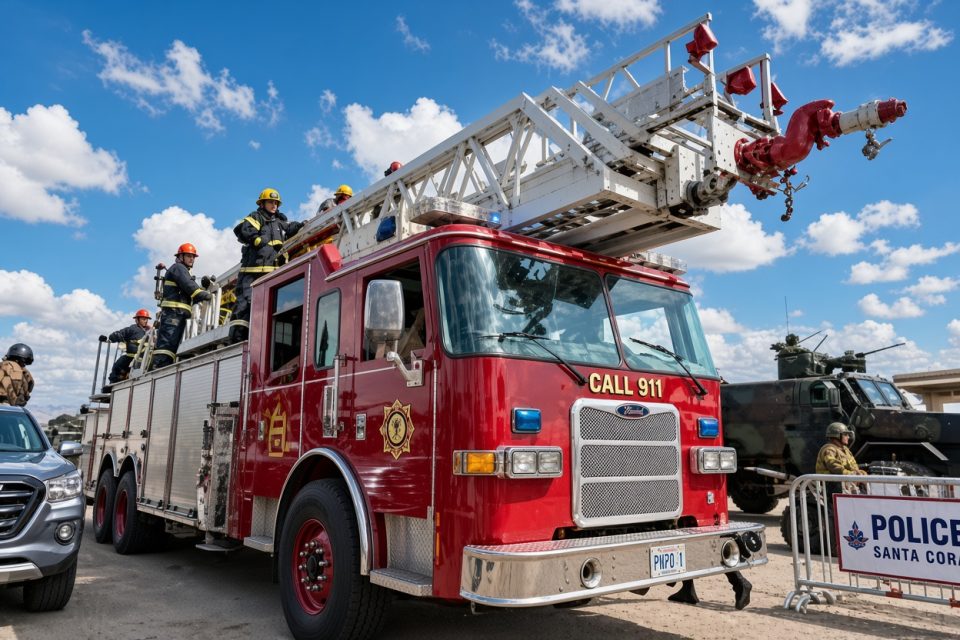
Fire outbreaks continue to pose a serious threat to lives, property and economic activities in Ghana, making the Ghana National Fire Service (GNFS) one of the country’s most important emergency response institutions. However, the effectiveness of the Service depends not only on the courage and commitment of its personnel but also on the availability of adequate equipment, logistics, funding and operational support. It is therefore time for the government to give the Fire Service the level of attention and investment it deserves.
Firefighters are often the first line of defence when homes, shops, markets, schools, offices and industrial facilities are engulfed by flames. In many cases, their timely intervention can prevent a small fire from becoming a major disaster. Yet, without the necessary equipment and resources, even the most dedicated firefighter may struggle to contain a rapidly spreading blaze. The government must recognise that personnel alone cannot overcome every emergency without the right tools.
One of the major concerns that deserves urgent attention is the availability of modern firefighting equipment and functional fire tenders. Fire engines must be suitable for different emergencies, properly maintained and readily available for deployment. Water tankers, protective clothing, breathing apparatus, rescue tools and other essential equipment must also be provided in sufficient quantities. Investing in these resources would strengthen the Service’s ability to respond quickly and safely to emergencies across the country.
Logistics remain equally important. Fire stations need reliable communication systems, adequate fuel supplies, well-maintained vehicles and dependable access to water. Where these essential requirements are lacking, response times may be affected, allowing fires to spread and cause greater destruction. Government must therefore ensure that the Service receives the operational support needed to carry out its mandate efficiently.
The distribution of fire stations and resources across the country also requires careful consideration. While major urban centres may have relatively greater access to emergency services, some rural communities and developing towns face challenges associated with distance and limited firefighting infrastructure. The government should prioritise areas where emergency response gaps are greatest, ensuring that residents in every region have reasonable access to timely fire protection.
Particular attention must be given to markets, commercial centres, schools, hospitals, fuel stations and industrial facilities, where fire outbreaks can have devastating consequences. Overcrowding, unsafe electrical installations, poor storage practices and inadequate access routes can make firefighting operations more difficult. Equipping the GNFS must therefore go hand in hand with fire safety inspections, public education and effective enforcement of relevant safety regulations.
Beyond equipment and logistics, the welfare, training and professional development of firefighters must not be overlooked. These personnel routinely expose themselves to dangerous conditions in the line of duty. They require adequate protective gear, regular training, appropriate medical support and working conditions that safeguard their physical and psychological well-being. A properly equipped and motivated workforce is essential to building a responsive and effective emergency service.
The government should also strengthen the funding and maintenance systems that sustain firefighting operations. Providing new equipment without allocating resources for servicing, repairs and replacement can undermine the benefits of such investments. Authorities must adopt a sustainable approach that includes regular equipment inspections, transparent procurement, proper asset management and accountability for public funds. Parliament, relevant ministries and other oversight institutions should ensure that budgetary commitments translate into practical improvements on the ground.
At the same time, the responsibility for fire prevention cannot rest solely on the government or the Fire Service. Individuals, businesses, landlords, institutions and community leaders must take fire safety seriously. Households should handle gas cylinders and electrical appliances safely, while businesses should provide appropriate fire extinguishers, maintain safe exits and comply with applicable regulations. Public education campaigns must be intensified so that citizens know how to prevent fires and respond safely when emergencies occur.
Ultimately, equipping the Ghana National Fire Service is not merely an administrative obligation; it is an investment in national safety, economic stability and the protection of human life. The government must demonstrate a clear commitment to providing the resources, logistics, infrastructure and operational capacity required by the Service. A well-equipped Fire Service can respond more effectively, reduce avoidable losses and strengthen public confidence in emergency protection. The time for urgent and sustained action is now. Ghana cannot afford to leave its firefighters without the tools they need to save lives and protect property.
