
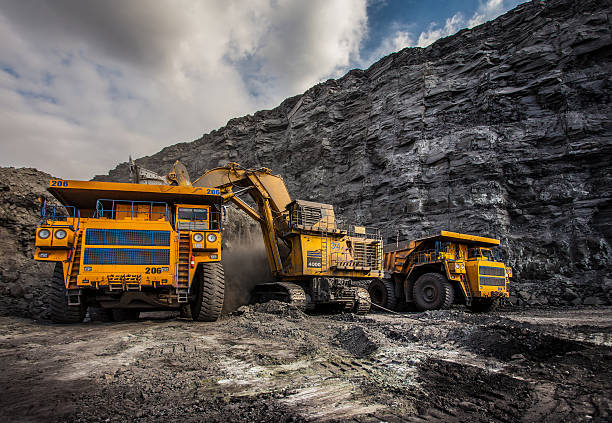
EDITORIAL: MINERAL WEALTH, JOBLESS YOUTH!
●WHO IS BENEFITING?
● THE BIBIANI PERSPECTIVE!
Bibiani and its surrounding communities are endowed with significant mineral resources, particularly gold, which has for decades contributed to Ghana’s mining economy. Yet, despite the economic activity generated by mining, a troubling question continues to confront many residents: why do young people in communities where mineral resources are extracted still struggle to find decent and sustainable employment?
Mining has the potential to transform host communities through employment, infrastructure, healthcare, education and local economic development. However, the mere presence of mineral wealth does not automatically translate into prosperity for the people living around mining sites. The experience of Bibiani therefore deserves serious public discussion about jobs, healthcare, skills development, corporate responsibility and the role of political and traditional authorities.
JOBS
Employment remains one of the most important expectations of communities hosting mining operations. Young people naturally expect mining companies operating in their areas to provide meaningful opportunities for both direct and indirect employment.
While mining companies require specialised professionals, there are also numerous opportunities in administration, security, transportation, catering, construction, equipment maintenance, environmental services, logistics, agriculture and other support activities. Local people should therefore not be made to feel that mining employment is exclusively reserved for people from outside the community.
The challenge, however, is that mining is becoming increasingly technologically driven. This means that young people without relevant technical and professional skills may find it difficult to compete for skilled positions. The solution cannot simply be to demand that every mining job goes to a local resident. Rather, there must be deliberate investment in preparing local youth to qualify for those opportunities.
Mining companies, government agencies, traditional authorities and local assemblies must work together to develop transparent local employment frameworks. Recruitment processes should be clear, merit-based and accessible, while information about available positions should reach communities in a timely manner.
HEALTH
The health implications of mining activities must receive equal attention. Mining can stimulate economic activity, but poorly managed operations can expose communities to environmental and public-health risks.
Dust, noise, contaminated water sources, land degradation and other environmental challenges can affect the wellbeing of residents if proper safeguards are not enforced. Communities should therefore not have to choose between economic opportunity and a healthy environment.
Mining companies operating around Bibiani must strengthen their investment in healthcare through properly targeted corporate social responsibility programmes. Such interventions could include support for hospitals and health centres, medical equipment, ambulance services, community health programmes and preventive healthcare initiatives.
Government agencies must also enforce environmental and health regulations without fear or favour. Environmental protection should not become secondary simply because a company contributes revenue or provides employment.
SKILLED AND UNSKILLED YOUTH
The employment debate must distinguish between skilled and unskilled youth. Both groups deserve opportunities, but the nature of those opportunities will differ.
Skilled young people—including engineers, geologists, accountants, electricians, mechanics, laboratory technicians, ICT specialists and other professionals—should be encouraged and supported to compete for positions within the mining value chain.
At the same time, unskilled youth should not be abandoned. Mining companies and other stakeholders can provide structured apprenticeship, vocational training and competency-development programmes that enable young people to acquire marketable skills.
Bibiani can benefit enormously from a deliberate local skills-development programme linked directly to the needs of the mining industry. Young people could be trained in areas such as welding, fabrication, electrical work, heavy-equipment operation, mechanical maintenance, environmental management, hospitality, driving and other technical services.
The ultimate objective should be to move young people from dependence on temporary jobs to sustainable careers, entrepreneurship and participation in the broader mining supply chain.
POLITICIANS AND CHIEFS’ BIASES
One uncomfortable issue that must be confronted is the influence of political and traditional authorities in determining who gets opportunities.
Politicians and traditional leaders have an important role to play in advocating for their communities. However, that responsibility must not become an avenue for favouritism, political patronage or the selective distribution of opportunities.
Mining-related employment and contracts should not be treated as political rewards. Young people should not be required to demonstrate loyalty to a political party, politician, chief or influential individual before accessing legitimate opportunities.
Traditional authorities also have a responsibility to protect the collective interests of their people. Chiefs should advocate for transparent development agreements, fair community benefits and opportunities that extend beyond a small circle of influential individuals.
Political leaders, chiefs and community leaders should therefore support systems that promote merit, transparency, inclusion and accountability.
The young person who supports one political party should have the same opportunity as the young person who supports another—or no political party at all. Mineral resources belong to the nation, and the benefits associated with them must be managed in a manner that does not deepen political or social divisions.
CORPORATE SOCIAL RESPONSIBILITY
Corporate Social Responsibility, or CSR, must move beyond occasional donations and ceremonial presentations.
Mining companies should ask a more fundamental question: What lasting legacy are we leaving in the communities where we operate?
A meaningful CSR programme should address the actual development priorities of host communities. These may include education, healthcare, potable water, roads, sanitation, skills training, entrepreneurship, agriculture and environmental restoration.
CSR projects should also be developed through consultation with residents. Communities must have a voice in determining their priorities rather than simply receiving projects designed without adequate local input.
Mining companies can also support local businesses by deliberately integrating qualified local suppliers and contractors into their procurement systems. This would allow mining activity to generate indirect employment and stimulate businesses beyond the mine itself.
More importantly, CSR should be measurable. Companies should publish what they spend, where they spend it, who benefits and what outcomes have been achieved. Transparency will help build trust between mining companies and host communities.
SOLUTIONS
The challenges facing mining communities cannot be solved by government alone. They require a coordinated partnership involving mining companies, government, traditional authorities, political leaders, local assemblies, civil society organisations and residents themselves.
First, there should be a clear local employment policy that promotes fair access to jobs for suitably qualified residents of host communities.
Second, mining companies should establish or strengthen skills-development centres where young people can acquire technical and vocational skills linked to actual industry requirements.
Third, there must be greater support for local businesses and entrepreneurs so that mining creates an ecosystem of economic opportunities rather than employment only within the mines.
Fourth, government must strengthen monitoring of environmental and health standards. Companies that fail to meet their obligations should face appropriate sanctions, regardless of their political or economic influence.
Fifth, chiefs and political leaders should commit themselves to non-partisan development advocacy. Community resources and opportunities must not become instruments of political patronage.
Sixth, mining companies should make their CSR programmes more transparent and participatory. Host communities should know what commitments have been made and should be able to monitor their implementation.
Seventh, greater attention should be given to the post-mining future. Mining resources are finite. Bibiani must therefore use today’s mining revenues and opportunities to build an economy that can survive when mining activity eventually declines.
Agriculture, agro-processing, tourism, small-scale manufacturing, technology and other productive sectors should be developed alongside mining.
CONCLUSION
The central question is not whether mining should take place in Bibiani. The more important question is whether mining is delivering the broad-based development that host communities deserve.
Mineral wealth should not coexist indefinitely with widespread youth unemployment, inadequate healthcare, environmental concerns and limited economic opportunities.
Bibiani’s young people deserve more than the opportunity to watch valuable minerals leave their communities. They deserve the skills to participate in the industry, the chance to build businesses around it, access to quality healthcare and an environment in which they can build sustainable futures.
Mining companies have a responsibility. Government has a responsibility. Traditional authorities have a responsibility. Political leaders have a responsibility. And the community itself has a responsibility to demand accountability constructively.
The ultimate measure of mining success should not be the quantity of gold extracted alone. It should also be measured by the number of sustainable jobs created, businesses developed, lives improved, young people trained, communities transformed and future generations protected.
For Bibiani, the time has come to move the conversation from simply asking “Who is mining?” to asking the more important question:
“Who is truly benefiting from our mineral wealth?”
